.jpg)


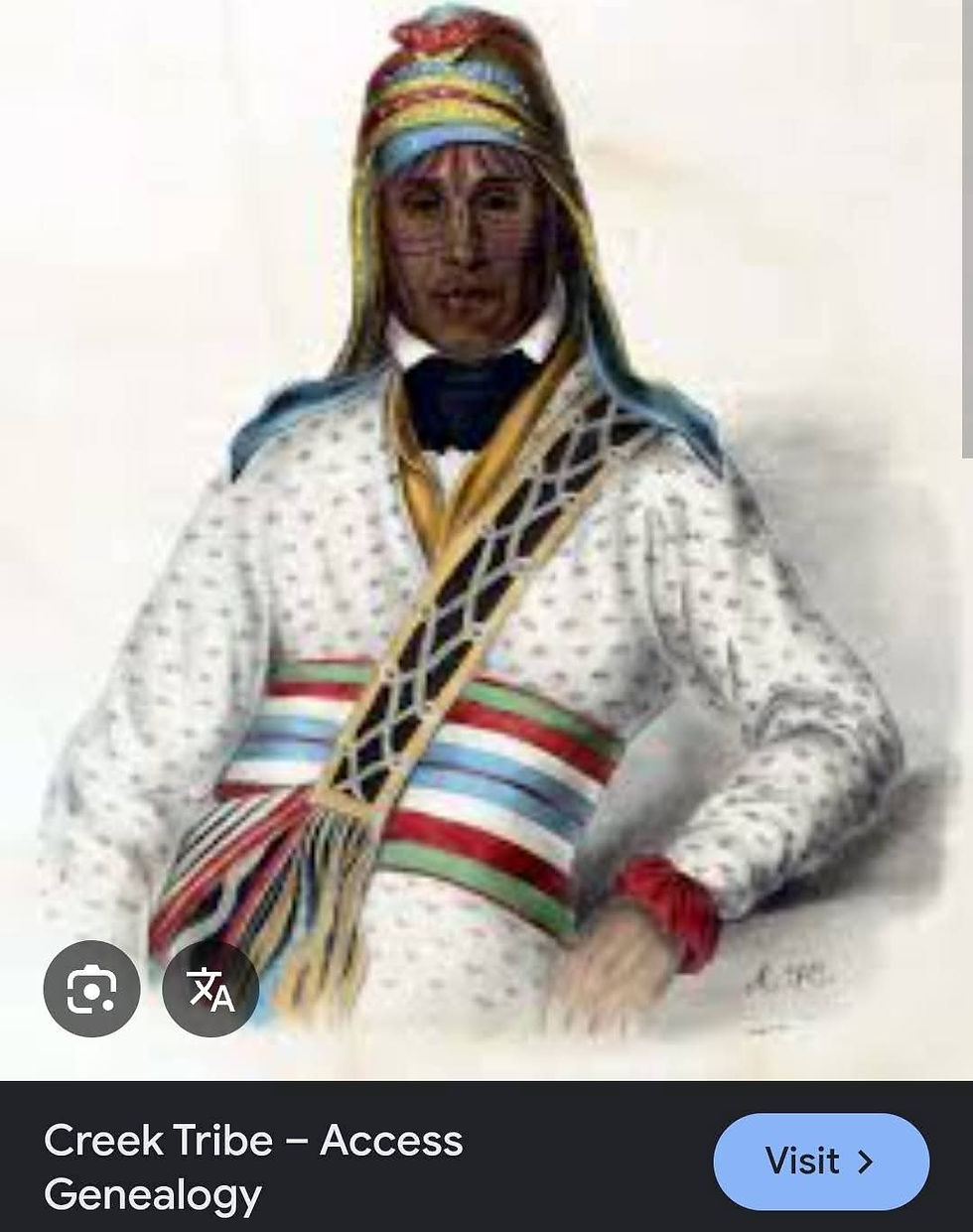
The Secret🤫 Truth About Abraham Yobley (A Negro 🤴🏾Seminole Chief): The Real King of Florida They Tried to Erase!🧐

Updated: Sep 8

ABRAHAM YOBLEY (c. 1790–c. 1870): LEGACY OF A (BLACK) SEMINOLE LEADER
Archival Roots, Birthplace, and Genealogy
Historical documentation and modern genealogical research place Abraham—frequently recorded in archives as "Negro Abraham," Souanaffe Tustenukke, or Yobly—as a foundational architect of Black Seminole history. Born into slavery around 1787 to 1790, archival tracking of his direct parentage remains obscured by the shadows of the institution of chattel slavery, with specific names of his mother and father unrecorded in primary birth rolls. However, historical consensus and regional migration studies indicate his lineage is tied closely to the broader diaspora of freedom-seekers fleeing plantation bondage in the South Carolina Lowculture and Georgia. Let's not forget that "born in slavery" doesn't automatically mean African ancestry because Indigenous Americans were the first enslaved and more prevalent slavery.
Read: Colonial enslavement of Native Americans included those who surrender, too: https://www.brown.edu/news/2017-02-15/enslavement

Archival inferences and historical accounts, such as those analyzed by historian Kenneth W. Porter, suggest Abraham's parents were likely early fugitives or part of the diaspora that crossed into Spanish Florida or the Georgia frontier *potential Gullah, Guale, Yuchi, Yamassee/Creek or other woodlands descendants. In his youth, Abraham was held as an enslaved servant in Pensacola, Florida, under Dr. Sierra, a physician with a Spanish surname. Despite his servitude on Spanish soil, historical linguistic analyses note that Abraham was "English raised" or the direct offspring of English-speaking runaways, as he operated fluidly in English alongside the Muskogean (Creek-Seminole) tongue rather than Spanish.

Pivotal Importance within the Seminole Nation
Abraham's ascent within the Seminole Nation transformed him into one of the most consequential diplomats and military strategists of the 19th century. During the War of 1812, he seized the promise of freedom offered by British Major Edward Nichols, escaping Andrew Jackson's military sphere to help construct and defend the iconic Negro Fort (Prospect Bluff) along the Apalachicola River. Following the fort's destruction, Abraham migrated deep into Florida territory, where in 1813 he helped found and lead the prosperous Black Seminole settlement of Pilaklikaha (near modern-day Sumter County).

Within traditional Seminole governance, Abraham's status was cemented through strategic alliances and unmatched intellect. He served as the primary interpreter, advisor, and lieutenant to Micanopy, the principal hereditary chief of the Alachua Seminoles. Recognized by U.S. military officers as the "principal negro chief" of the nation, Abraham wielded immense authority as a diplomat, legal negotiator, and protector of Black Seminole sovereignty. He was a principal architect and negotiator during the grueling peace talks of the Second Seminole War (1837–1838), where he successfully argued for the protection and legal rights of free Black and allied Seminole families against predatory slave hunters before the forced removal to Indian Territory (Oklahoma). He lived out his later years in Oklahoma, passing away after 1870 as an enduring symbol of resilience, diplomacy, and cross-cultural leadership.


We must keep these stories, histories & truths alive!
Connection with your family's heritage.


.jpg)


Comments